What Are Industrial Couplings? Types, Uses, and Benefits
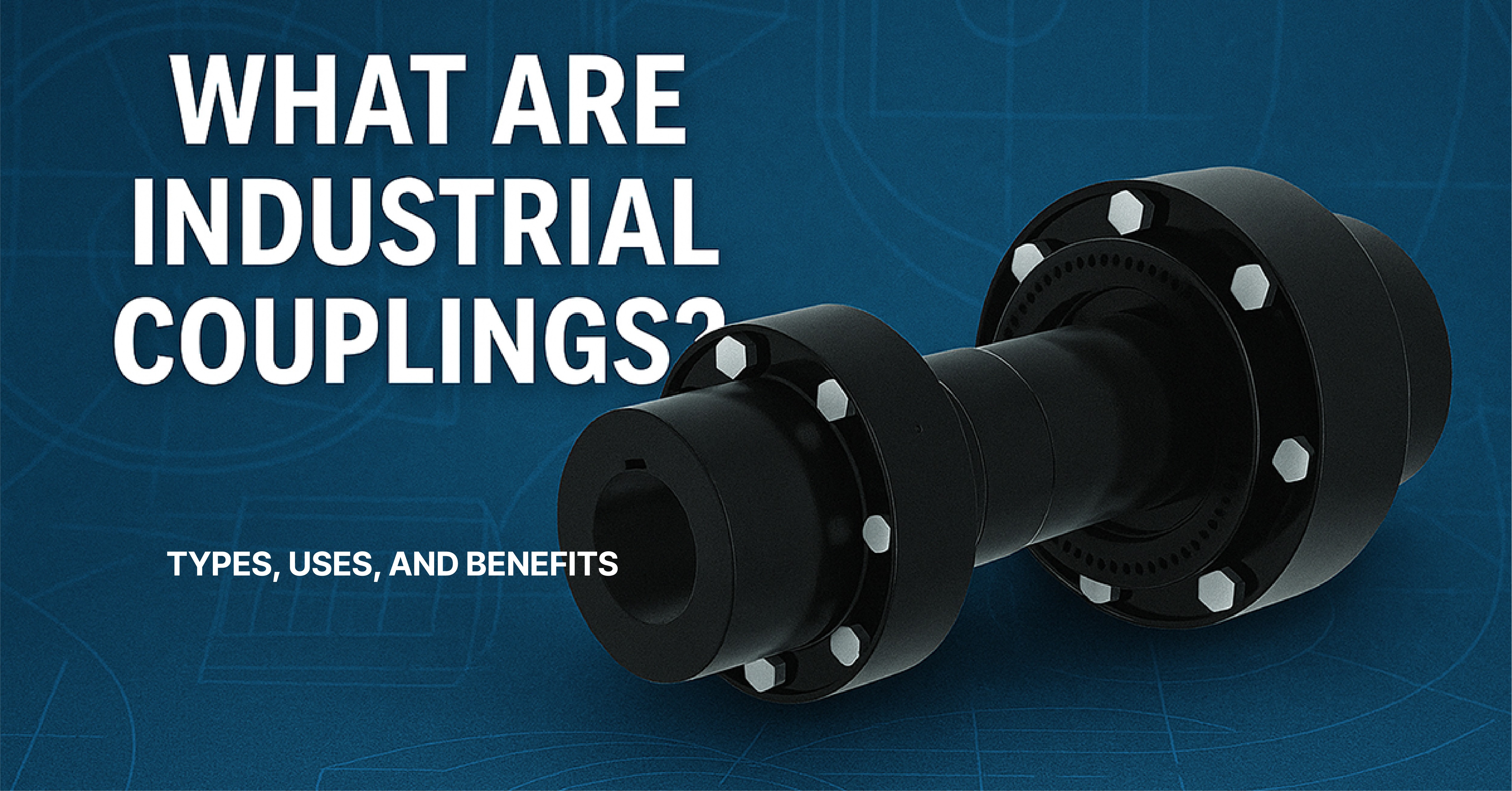
In the world of industrial machinery, every component, no matter how small, plays a vital role in ensuring smooth and efficient operations. One such essential component is the industrial coupling. Designed to connect two shafts and transfer power from one to another, couplings help manage misalignment, absorb vibrations, and enhance overall mechanical performance.
So, what is industrial coupling, and why is it a core component of many machines? In this comprehensive guide, we'll explore the types, uses, and benefits of industrial couplings, along with insights into their applications across various industries.
What is an Industrial Coupling?
An industrial coupling is a mechanical device that joins two shafts at their ends to transmit power. These shafts may be aligned or misaligned, and the coupling compensates for these deviations while allowing for the transfer of torque.
The main purpose of a coupling is to ensure that machinery components such as motors, pumps, compressors, and generators can operate together as a single functional unit. In addition to transmitting power, couplings protect equipment from overload, vibration, and wear.
An industrial coupling is a mechanical device used to connect two rotating shafts so that power and torque can be transmitted smoothly from one machine component to another. In many industrial systems, such as motors, pumps, compressors, and generators, couplings play an important role in ensuring that different machine parts work together efficiently as a single unit.
One of the key advantages of industrial couplings is their ability to handle minor shaft misalignment while still maintaining reliable power transmission. They also help absorb vibrations and shocks that occur during machine operation, which protects equipment from excessive wear and reduces the chances of sudden breakdowns.
Industrial couplings come in several types, including gear couplings, disc couplings, jaw couplings, and pin bush couplings. Each type is designed for different operating conditions, depending on factors such as torque capacity, speed, and alignment requirements. Choosing the right coupling helps improve machine efficiency, extend equipment lifespan, and maintain smooth industrial operations.
In simple terms, industrial couplings may seem like small components, but they play a crucial role in keeping industrial machinery running safely, efficiently, and reliably.
Types of Industrial Couplings
There are many types of industrial couplings, each designed to serve a specific purpose depending on operational demands such as torque, alignment tolerance, and environmental conditions.
Industrial couplings come in different types, each designed to meet specific machine requirements and operating conditions. Choosing the right type of coupling is important because it helps ensure smooth power transmission, reduces mechanical stress, and improves the overall reliability of industrial equipment.
One of the most commonly used types is the gear coupling, which is known for its high torque capacity and ability to handle heavy-duty applications. Disc couplings are another popular option, especially in high-speed machines, because they provide precise power transmission while accommodating slight misalignment between shafts.
Jaw couplings are widely used in many industries due to their simple design and ability to absorb shocks and vibrations. Similarly, pin bush couplings are designed to handle moderate misalignment and are often used in machinery that requires flexible power transfer.
Each type of industrial coupling serves a unique purpose, and selecting the right one depends on factors such as load capacity, speed, alignment tolerance, and the overall operating environment of the machine. When the correct coupling is used, it helps improve equipment efficiency and extends the lifespan of industrial machinery.
Here are some of the most widely used coupling types:
1. Gear Coupling
Gear couplings are composed of toothed hubs and sleeves, which allow them to transmit high torque and handle angular misalignment. They are widely used in heavy-duty machinery such as rolling mills, steel plants, and large industrial mixers.
2. Disc Coupling
Disc couplings use one or more flexible metal discs to transfer torque while accommodating angular and axial misalignments. They are ideal for high-speed and precision equipment and do not require lubrication.
3. Pin Bush Coupling
Pin bush couplings use flexible bushes between pins to absorb shocks and accommodate minor misalignments. These are simple in design and are widely used in pumps, fans, compressors, and conveyors.
4. Jaw Coupling
Jaw couplings consist of two hubs and a spider (elastomeric insert) that provides damping of vibration and misalignment. They are popular in automation, packaging, and light-duty industrial machines.
5. Grid Coupling
These couplings use a metallic spring-like grid to connect two flanged hubs. They provide excellent shock absorption and are ideal for heavy machinery such as blowers, conveyors, and crushers.
6. Flexible Coupling
Flexible couplings can handle various degrees of misalignment and are used in general industrial applications. Their flexibility comes from elastomeric or metallic components that allow for torque transmission while protecting the equipment.
Coupling Uses in Industrial Applications
The uses of industrial couplings span across nearly every major industrial sector. Their ability to efficiently transmit torque while protecting mechanical systems makes them invaluable to modern engineering operations.
Here are some key applications of couplings in industry:
Industrial couplings play an important role in many industrial applications where power needs to be transferred between rotating shafts. They are commonly used to connect motors with equipment such as pumps, compressors, conveyors, mixers, and gearboxes. By linking these components together, couplings allow machines to operate smoothly and efficiently.
In real-world industrial environments, couplings also help manage small shaft misalignments that naturally occur during machine operation. Instead of causing damage, the coupling absorbs these minor movements and keeps the system running without putting excessive stress on the connected equipment.
Another key use of industrial couplings is to reduce vibration and absorb shocks that occur during start-up or heavy load conditions. This helps protect important machine parts from premature wear and ensures stable performance over time.
Overall, couplings may seem like small components, but they play a crucial role in keeping industrial machinery reliable, efficient, and safe across a wide range of applications.
Manufacturing & Production Lines
Couplings connect motors to various mechanical parts like rollers, conveyors, and mixers. They ensure smooth operation, even in cases where precise alignment is not possible, reducing downtime and boosting productivity.
Power Generation
In power plants, couplings connect turbines to generators or pumps. Gear couplings and grid couplings are preferred for their ability to transmit high torque and withstand thermal expansion
Water & Waste Management
Pumps in water treatment facilities rely on pin bush and flexible couplings to absorb vibration and work efficiently in corrosive environments.
Automotive & Aerospace
Precision machinery such as testing rigs and automated assembly systems use disc couplings for zero-backlash performance and high torque accuracy.
Chemical & Pharmaceutical Plants
These industries require sterile and precise equipment. Couplings with non-lubricated and backlash-free performance, like disc couplings, are commonly used in mixers, centrifuges, and chemical reactors.
Construction & Mining
Couplings in this sector must endure dust, shock, and load variations. Gear and grid couplings are ideal for rugged applications like crushers, hoists, and heavy equipment.
Benefits of Industrial Couplings
The choice of a correct coupling system can significantly impact the longevity, efficiency, and safety of machinery. Here are some notable benefits of couplings:
Industrial couplings offer several important benefits that help machines run smoothly and efficiently in industrial environments. One of their key advantages is the ability to transmit power effectively between two rotating shafts while maintaining stable performance. This ensures that equipment such as motors, pumps, and gearboxes work together without interruption.
Another major benefit of industrial couplings is their ability to accommodate slight shaft misalignment. In real-world operations, perfect alignment is not always possible, and couplings help manage these small variations without causing damage to the connected machinery.
Couplings also help reduce vibrations and absorb shocks that occur during machine start-up or heavy load conditions. By minimizing these stresses, they protect important machine components and help extend the lifespan of the equipment.
Overall, industrial couplings improve operational reliability, reduce maintenance issues, and support smoother machine performance, making them an essential component in many industrial systems.
Misalignment Handling
Couplings allow for angular, axial, and parallel misalignment between connected shafts, reducing wear and extending machinery lifespan.
Shock Absorption
They act as buffers by absorbing vibrations and torque fluctuations. This is crucial in minimizing stress on rotating machinery and protecting sensitive components.
Operational Safety
Couplings can be designed to fail in a controlled manner in the event of overload, protecting expensive machinery from catastrophic failure.
Ease of Maintenance
Many couplings are designed for quick installation and easy maintenance, helping reduce system downtime and operational costs.
Improved Efficiency
By ensuring smooth torque transmission, couplings help improve the overall energy efficiency of machines.
Versatility
Industrial couplings are available in various materials and designs, making them suitable for diverse operational conditions and applications.
Coupling Product Highlights
For those seeking high-quality industrial couplings, Formura offers a range of products built for reliability and performance. Their portfolio includes:
- Gear Couplings – High torque and rugged design for heavy industries
- Disc Couplings – Precision-driven, zero-backlash designs for critical machinery
- Pin Bush Couplings – Durable and simple couplings for a wide range of uses
- ESCO Couplings – Known for premium performance and global quality standards
Whether you are sourcing for new machinery or retrofitting existing systems, choosing the right coupling type is key to ensuring mechanical harmony and efficient performance.
FAQs On Industrial Couplings (Types, Uses & Benefits)
1. What is an industrial coupling?
An industrial coupling is a mechanical device used to connect two shafts and transmit power efficiently while compensating for misalignment and reducing vibration.
2. What are the main types of industrial couplings?
Common types include gear couplings, disc couplings, pin bush couplings, jaw couplings, grid couplings, and flexible couplings, each designed for different torque and alignment requirements.
3. Where are industrial couplings used?
Industrial couplings are widely used in manufacturing, power plants, water treatment systems, automotive applications, chemical industries, and construction equipment.
4. Why are industrial couplings important?
They ensure smooth power transmission, reduce mechanical stress, absorb shocks, and protect machinery from damage due to misalignment or overload.
5. What are the benefits of industrial couplings?
Key benefits include misalignment compensation, vibration damping, improved efficiency, enhanced safety, and reduced maintenance costs.
6. Which coupling is best for high torque applications?
Gear couplings and grid couplings are ideal for high torque and heavy-duty industrial applications due to their robust design and durability.
7. What is the difference between flexible and rigid couplings?
Flexible couplings allow misalignment and absorb vibrations, while rigid couplings require precise alignment and provide a solid connection.
8. How do couplings improve machine life?
By reducing vibration, handling misalignment, and preventing overload damage, couplings help extend the lifespan of machinery components.
Conclusion
In the ever-evolving landscape of industrial machinery, industrial couplings stand out as a core component enabling safe, efficient, and flexible operation. From accommodating shaft misalignment to transmitting torque and absorbing shock, couplings play a multifaceted role in virtually every sector of industry.
Understanding the different types of industrial couplings, be it gear coupling, disc coupling, or pin bush coupling, can help ensure the right fit for the right job. When sourced from reliable coupling product retailers and sellers, these components not only improve system reliability but also reduce long-term maintenance costs.
Explore the right coupling solution for your industrial setup and experience the difference in performance, durability, and efficiency.